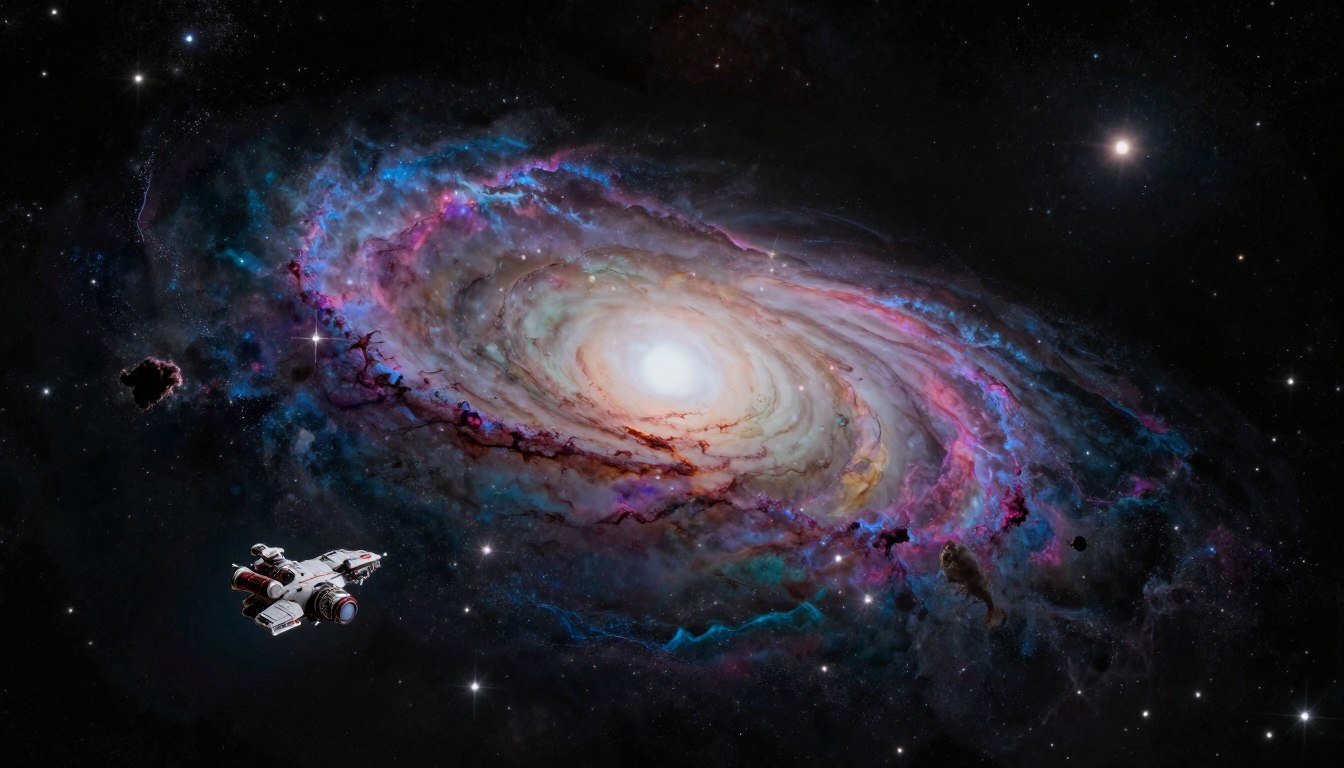
Did you know that the cosmos is currently stretching outward at an accelerating speed? This discovery, made by tracking distant supernovae, proves that our home is far more dynamic than a simple, empty void.
Exploring the heavens reveals fascinating universe secrets that challenge how we view our reality. By diving into these amazing facts about space, we can turn complex astronomical concepts into knowledge that anyone can enjoy.
Whether you are a lifelong stargazer or a curious beginner, there is always something new to uncover. Let us embark on a journey to learn Amazing Facts About Space that change our perspective on the infinite horizon.
Key Takeaways
- The universe is expanding at an accelerating rate.
- Distant supernovae provide evidence for cosmic growth.
- The cosmos is a dynamic environment, not just a void.
- Complex science can be made accessible for everyone.
- Learning about the stars helps us understand our own reality.
How to Begin Your Journey into Amazing Facts About Space
Stepping into the world of amateur astronomy opens up a universe of discovery right from your backyard. You do not need a professional observatory to start uncovering amazing facts about space. With the right approach, the night sky becomes an accessible classroom for everyone.
Setting Up Your Observation Tools
Many beginners make the mistake of buying an expensive telescope too early. Instead, a high-quality pair of 10×50 binoculars serves as the perfect entry point for most enthusiasts. These tools are portable, easy to use, and provide a wide field of view for scanning the heavens.
Through these lenses, you can easily spot astronomy wonders like the rugged craters on the Moon. You might even catch a glimpse of the Galilean moons orbiting Jupiter on a clear night. This hands-on experience builds a strong foundation for your future observations.
Utilizing Digital Resources for Cosmic Research
Modern technology has changed how we interact with the stars. You can now use powerful mobile applications like Stellarium to identify constellations and track planetary positions in real-time. These digital tools act as a personal guide, helping you navigate the celestial sphere with confidence.
By combining physical observation with digital data, you can uncover even more amazing facts about space. These resources turn complex data into visual maps that make learning feel like a game. Mastering these digital aids ensures that your journey through various astronomy wonders remains both educational and visually rewarding.
How to Understand the Scale of Our Solar System
To truly appreciate the cosmos, one must first understand the immense scale of our own solar system. Uncovering these fascinating universe secrets helps us realize how much space exists between the objects we see in the night sky.
The Vast Distances Between Planets
The distances within our neighborhood are truly staggering. For instance, light takes approximately eight minutes to travel from the Sun to Earth, which highlights the incredible gaps between worlds.
These celestial facts remind us that our planet is just a small part of a much larger structure. Navigating these distances requires a new way of thinking about space travel and observation.
Why the Sun Dominates Our Neighborhood
The Sun acts as the anchor for everything in our system. It contains 99.8% of the total mass of the entire solar system, which creates a powerful gravitational pull.
This gravity keeps all planets in stable orbits, ensuring our local environment remains consistent. Having accurate planetary information is essential for understanding how this massive star dictates the movement of every orbiting body.
The Reality of Solar Wind and Radiation
Beyond gravity, the Sun exerts a constant influence through solar wind. This stream of charged particles flows outward, constantly shaping the magnetic environments of the planets.
This radiation creates a dynamic boundary that protects or alters the atmospheres of nearby worlds. Understanding this flow is key to grasping why our local neighborhood is so uniquely balanced for life.
How to Identify Wonders of Deep Space Exploration
Modern space exploration allows us to witness the dramatic birth and death of stars across the cosmos. By peering into the deep reaches of the universe, we effectively look back in time to see how celestial structures evolve. This journey helps us appreciate the complex beauty hidden within the night sky.
Distinguishing Between Nebulae and Galaxies
It is easy to confuse the various glowing objects seen through a telescope, but they are quite different. Nebulae are essentially vast, beautiful clouds of gas and dust floating in space. They often serve as the nurseries where new stars begin their lives.
In contrast, galaxies are massive, organized systems that contain billions of stars, planets, and dark matter. Recent galaxy discoveries have shown us that these systems come in many shapes, including spirals and ellipticals. To help you identify what you are viewing, consider these key differences:
- Nebulae: Often appear as hazy, colorful patches of light.
- Galaxies: Look like dense, structured clusters of millions of individual stars.
- Scale: Galaxies are significantly larger and contain far more mass than nebulae.
The Lifecycle of Stars Explained
Every star follows a predictable path based on its initial mass. A star’s size determines whether it will live a long, quiet life or end in a spectacular display. Smaller stars, like our Sun, eventually fade away as white dwarfs. Larger stars, however, face a much more dramatic conclusion.
Supernovas and the Creation of Heavy Elements
When a massive star runs out of fuel, it collapses and explodes in a violent event known as a supernova. These explosions are essential to the chemical makeup of our universe. During this process, the intense heat and pressure forge heavy elements like gold and silver.
These elements are then scattered across the cosmos, eventually becoming part of new planets and star systems. This cycle of space exploration reveals that the atoms in our own bodies were once forged in the heart of an exploding star. Understanding these origins provides a profound perspective on our connection to the universe.
How to Track Celestial Events and Cosmic Mysteries
The night sky acts as a living map filled with rhythmic patterns waiting to be discovered. By developing a keen eye, you can participate in the ongoing journey of space exploration from your own backyard. This practice requires patience, but the rewards of witnessing the universe in motion are truly breathtaking.
Monitoring Meteor Showers and Eclipses
Meteor showers represent one of the most accessible cosmic mysteries for amateur observers. These events occur when Earth passes through the dusty debris trails left behind by passing comets. As these particles enter our atmosphere, they burn up and create brilliant streaks of light across the darkness.
Eclipses offer another chance to witness the clockwork precision of our solar system. Whether you are tracking a lunar or solar event, using a reliable calendar helps you prepare your gear in advance. Planning ahead ensures you never miss these fleeting moments of alignment.
Interpreting Signals from Deep Space
Modern technology allows scientists to decode complex data arriving from the furthest reaches of the universe. These galaxy discoveries provide vital clues about how stars form and evolve over billions of years. By analyzing light waves and radio frequencies, researchers can map structures that remain invisible to the naked eye.
Interpreting these signals is a collaborative effort that bridges the gap between theory and reality. You can follow these updates through various online observatories and public research databases. Staying informed about these findings makes the vastness of space feel much more personal and reachable.
The Search for Exoplanets in Habitable Zones
One of the most exciting areas of study involves finding worlds that orbit distant stars. Scientists specifically look for planets located in the habitable “Goldilocks” zones, where temperatures might allow liquid water to exist. Finding these environments is a major milestone in our quest to understand if we are alone in the universe.
Thousands of potential worlds have already been identified through advanced telescope missions. Each new discovery adds a piece to the puzzle of planetary formation. This search continues to push the boundaries of our knowledge regarding the potential for extraterrestrial environments.
How to Safely Observe the Night Sky
Your journey through the night sky should be as secure as it is awe-inspiring. Whether you are a beginner or a seasoned enthusiast, prioritizing safety ensures that you can enjoy astronomy wonders for many years to come.
Choosing the Right Location for Stargazing
Finding the perfect spot is essential for clear views of the cosmos. You should seek out areas far from urban light pollution to witness the true depth of the Milky Way.
Dark sky parks or remote rural fields offer the best conditions for your equipment. These locations allow you to gather celestial facts while enjoying the natural beauty of the universe without interference from city lights.
Essential Safety Tips for Solar Observation
Observing the Sun requires extreme caution and specialized gear. You must never look directly at the Sun without using certified solar filters, as the intensity of solar radiation can cause permanent retinal damage.
Always inspect your equipment for scratches or pinholes before every session. Using improper filters or makeshift materials is dangerous and can lead to irreversible vision loss.
Protecting Your Vision During Nighttime Viewing
Your eyes need time to adjust to the darkness to see faint objects clearly. Using a red-light flashlight is a simple yet effective way to navigate your surroundings without ruining your night vision.
Red light does not trigger the same chemical reaction in your eyes as white light. By keeping your vision adapted to the dark, you can continue to uncover astronomy wonders with ease and precision.
Understanding these celestial facts helps you maintain a safe environment while you explore the stars. Refer to the following guide to compare different observation environments for your next outing.
| Environment Type | Light Level | Visibility | Safety Priority |
|---|---|---|---|
| Urban Center | High | Low | Traffic Awareness |
| Suburban Backyard | Moderate | Medium | Equipment Security |
| Dark Sky Park | Very Low | High | Navigation & Wildlife |
| Solar Observation | Extreme | High | Certified Filters |
Conclusion
The universe offers an endless array of wonders that invite us to keep looking upward. Every clear night provides a fresh opportunity to question our place in the vast expanse above.
You now possess the skills to navigate the night sky with confidence. By continuing to investigate cosmic mysteries, you gain a deeper appreciation for the science that shapes our reality. These efforts turn distant lights into a familiar map of our neighborhood.
Accurate planetary information serves as the foundation for every great discovery. Whether you use a telescope from Celestron or a simple stargazing app, your curiosity drives progress. Share these amazing facts with friends to spark interest in the world beyond our atmosphere.
The sky remains a welcoming place for those willing to learn. Your journey into the unknown is just beginning. Keep your eyes on the horizon and stay curious about the beauty found in the dark reaches of space.